Welding in space asks about assembly, not only launch
Two JOINS joining techniques, and the difference between a plan and success
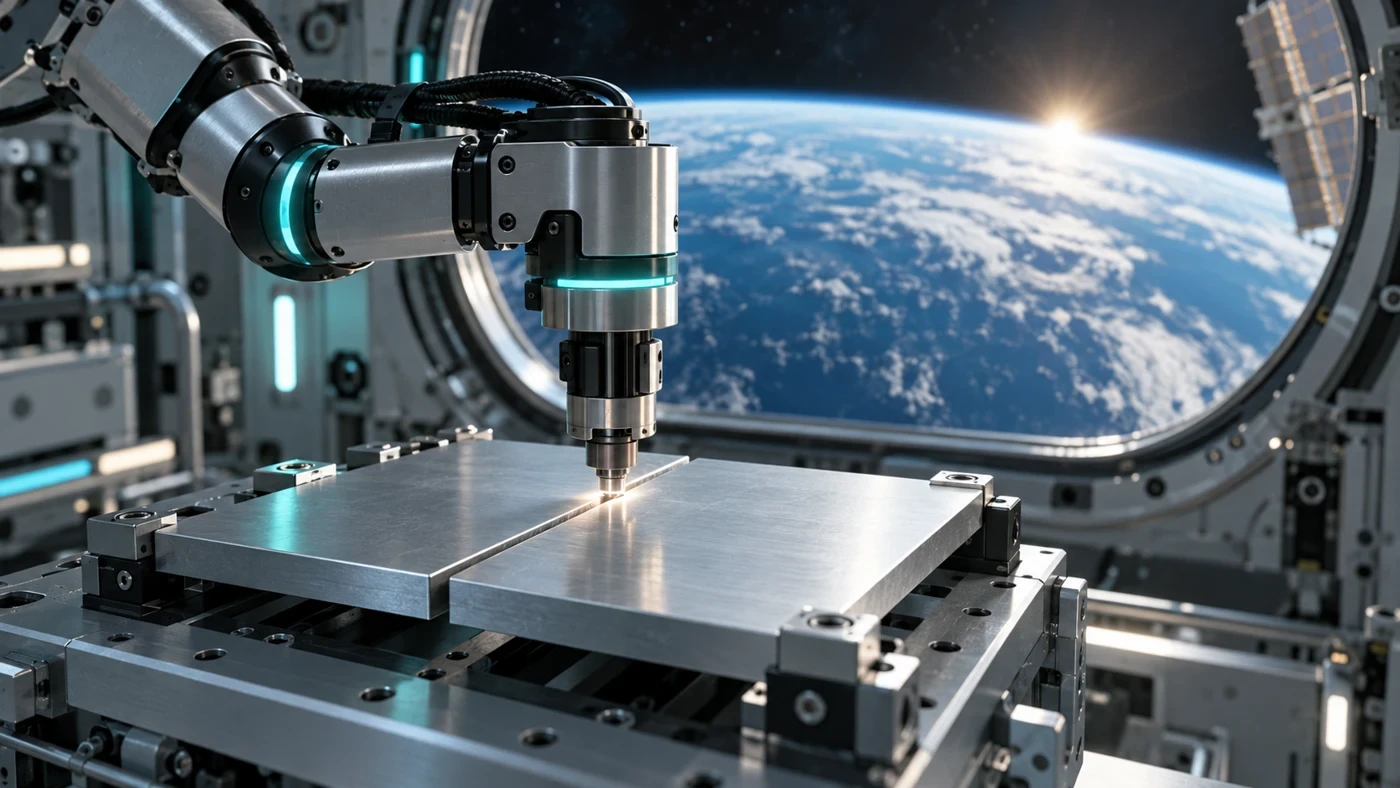
Space structures are limited by what can fit inside a launch vehicle. NASA's November 24 CRS-25 mission overview includes plans for the JOINS in-space joining demonstration. The experiment is small, but its question is large: could structures be assembled in orbit rather than sent fully finished from Earth?
The two processes are not the same
NASA says JOINS plans to test laser-beam and friction-stir welding on aluminum and stainless steel. The former melts material with a precise laser; the latter uses a rotating tool and friction to soften and join metal. The useful question is not how many techniques are named, but what quality and operating conditions each achieves in space.
An autonomous robot is not a completed factory
The plan is to demonstrate autonomous robotic welding inside the Bishop Airlock. An experiment in space does not mean large stations can already be built at will. Joint quality, power and heat, process stability and recovery from failure all require evaluation. Distinguishing a demonstration from repeatable industrial production turns expectations into testable requirements.
A supply mission becomes a laboratory
CRS-25 is described as carrying roughly 11,000 pounds of supplies and research equipment. NASA also outlines muscle, drug-delivery and radiation-measurement studies. Spacecraft supply and station operations create a testing environment for new technology. Plans in a mission overview must not be rewritten as completed experiments or clinical treatment results.
Wait for small results before imagining large structures
NASA sees potential for in-orbit joining to reduce launch-size constraints and support assembly and repair. The editors will look for which materials were joined, under what conditions and with what repeatable quality. This article explains a mission plan. The cited overview alone does not verify launch, arrival or experimental success, and we do not convert it into a company's future profits.
Related video
Lockheed Martin · JOINS · YouTube ↗
Core sources
- NASA, Northrop Grumman CRS-25 Mission Overview,2026.11.24
https://www.nasa.gov/missions/station/nasas-northrop-grumman-crs-25-mission-overview/
Verification scope
The article was checked against the public sources below. Interpretation and forecasts are distinguished from established results. Linking a related video does not endorse every claim in it.